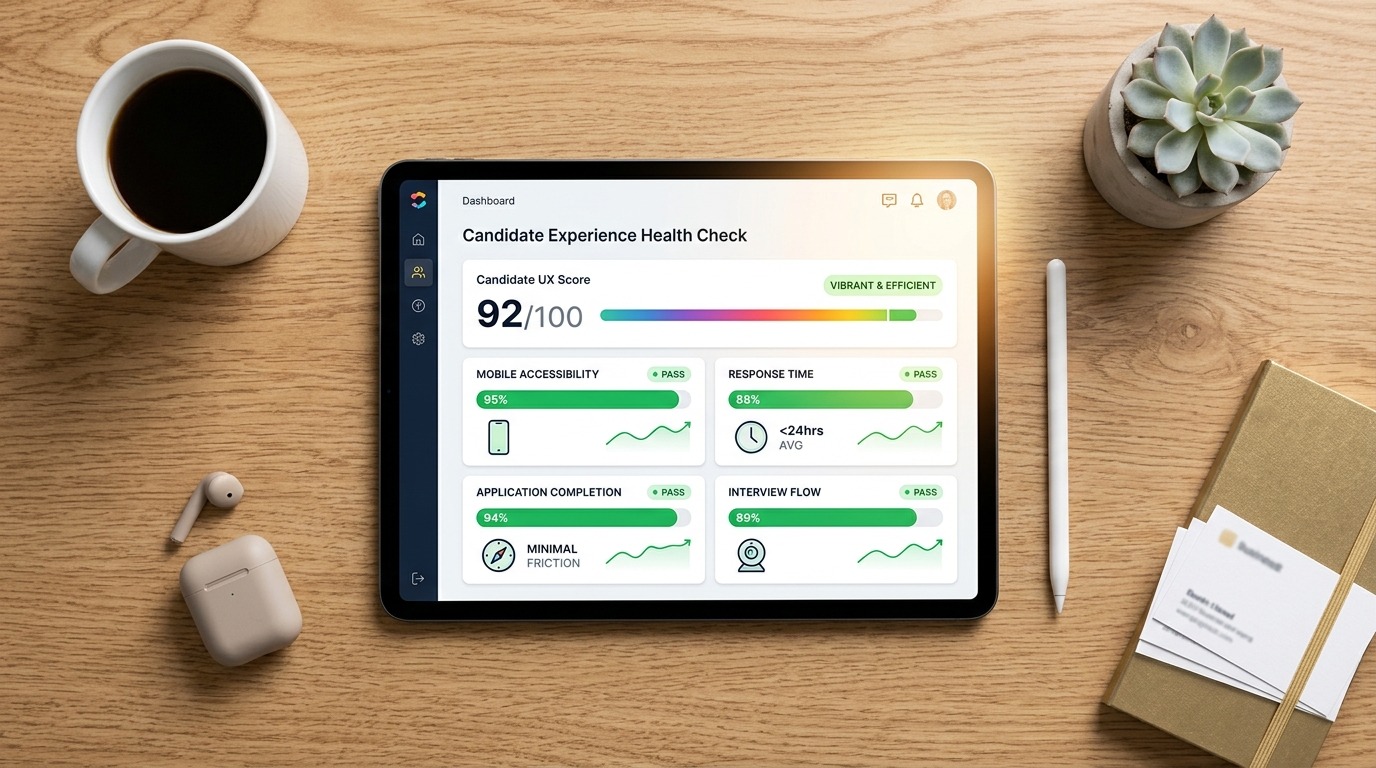
Top-tier candidates rarely stick around in a broken application process. When a high-performing professional encounters friction, unclear expectations, or endless delays, they don’t complain—they simply drop out and accept an offer from a company that respects their time.
Data shows that complex application processes can cause candidate drop-off rates to spike significantly. To attract elite talent, talent acquisition teams must treat their hiring funnel with the same user-experience (UX) discipline that product teams bring to customer onboarding.
Here is a 5-step framework to audit your application process, eliminate unnecessary friction, and retain high-performing talent from application to offer.
Step 1: The “Mobile First” Friction Test
Over 60% of job seekers browse and apply for roles on mobile devices. If your application process requires candidates to upload a resume and then manually re-type the exact same work history into a 10-page portal, you are losing top talent at step one.
- How to Audit: Open your company’s career page on your smartphone right now. Try completing an application from start to finish using only your phone.
- The Fix: Strip away mandatory account-creation walls. Limit initial form fields to essential contact info and core questions, allowing candidates to complete screening steps asynchronously on their own schedule.
Step 2: Calculate Your Candidate Completion Rate
Many TA teams track total applications, but few track the drop-off rate—the percentage of candidates who start an application or screening invite but abandon it halfway through.
- How to Audit: Compare total clicks on your “Apply” button or initial screening links against total completed submissions.
- The Benchmark: If your drop-off rate exceeds 20–30%, your initial stage asks for too much effort up front without offering enough context about the role.
- The Fix: Keep the initial stage under 10 minutes. Use clear messaging explaining why the step is necessary and exactly how long it will take.
Step 3: Map the “Feedback Loop” Timeline
The primary driver of candidate anxiety—and the chief reason candidates accept competing offers—is silence. When a candidate completes an application or an initial video screen, how long do they wait before receiving a status update?
- How to Audit: Track your average Time-to-First-Response. Measure the days elapsed between candidate submission and human or automated feedback.
- The Benchmark: Top talent stays engaged when initial feedback is delivered within 48 to 72 hours.
- The Fix: Implement automated confirmation workflows that outline precise next steps and timeline expectations immediately upon submission.
Step 4: Assess Role-Clarity Alignment
Candidates often drop out mid-funnel because the actual responsibilities revealed in later interview rounds do not align with the original job description.
- How to Audit: Review candidate exit surveys or withdrawal reasons. Are applicants dropping out after the first live conversation citing mismatched expectations around compensation, hybrid flexibility, or core duties?
- The Fix: Replace vague, laundry-list job descriptions with outcome-based expectations (e.g., “In your first 90 days, you will launch X product” rather than “Must have 5+ years experience”).
Step 5: Audit the “Post-Screening” Hand-Off
The transition between initial screening and the first hiring-manager interview is where candidates most frequently report feeling like a “number” rather than a professional.
- How to Audit: Review how initial screening insights are delivered to the hiring manager. Is the manager receiving a raw transcript, or a structured, highlight-driven briefing?
- The Fix: Ensure screening outputs provide immediate, structured context (such as verified skill scores and short video highlights). This allows the hiring manager to skip repetitive introductory questions and dive straight into meaningful, high-value discussions during the live interview.
Candidate Experience Audit Scorecard
Use this lightweight rubric during your quarterly recruiting reviews:
| Friction Point | Red Flag | Ideal State |
| Application Length | Takes >10 minutes; requires re-typing CV details | Completed in <5 minutes on mobile |
| Response Time | >7 days to acknowledge submission | <48 hours to confirm next steps |
| Screening Format | Rigid scheduling tag; long phone calls | Flexible, asynchronous screening |
| Process Transparency | Vague timeline; unknown interview stages | Clear roadmap shared at step 1 |
Elevate Your Hiring UX
A high-converting candidate experience isn’t about grand gestures; it’s about removing unnecessary administrative barriers so great candidates can showcase their capabilities quickly and fairly.
By auditing your funnel for mobile ease, speed, and clear expectations, you protect your employer brand and ensure the best talent stays engaged through the final offer.